The Science of Global Warming: And Four Ways to Fix It
Hope Press. The evidence for climate change and four approaches to removing CO2.
Explore the bookPhysician, medical geneticist, author and founder of The Comings Foundation.
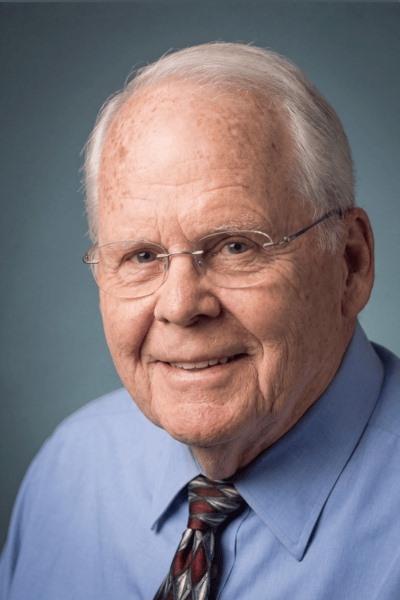
David Edward Comings is an American medical geneticist and former chief of genetics at the City of Hope National Medical Center in Duarte, California, a position he held from 1966 until his retirement in 2002.
He served as President of the American Society of Human Genetics in 1988 and as Editor of The American Journal of Human Genetics from 1978 to 1986, and has been a Fellow of the American Society for Clinical Investigation since 1968. He is known for research on the genetics of Tourette syndrome — which he began studying in the early 1980s with his wife Brenda Comings — and on the genetics of nicotine addiction, alcoholism and other behavioral disorders. By his retirement he had written more than 485 research articles, abstracts and book chapters; his CV lists 494 publications.
He founded Hope Press to publish work on Tourette syndrome and ADHD, and today directs The Comings Foundation, a private foundation devoted to combating climate change and advancing the medical sciences.
Dates are taken from Dr. Comings's curriculum vitae and published biography.
Grew up in Champaign-Urbana, Illinois, where his father was a professor of chemical engineering.
Entered pre-medical studies at age 16.
Graduated from Northwestern University Medical School at 23.
Internship, residency in internal medicine, and a hematology fellowship.
Chief of Hematology, Madigan General Hospital, Fort Lewis, Washington.
Trained with Dr. Arno G. Motulsky, University of Washington School of Medicine.
Head of the newly formed Department of Medical Genetics — a post he held until 2002.
Editor of The American Journal of Human Genetics.
Began the genetic studies of Tourette syndrome and behavioral disorders for which he is best known.
President of the American Society of Human Genetics.
Retired after 37 years at City of Hope; Emeritus Professor from 2003.
Published his exploration of neuroscience, genetics and faith.
Peer-reviewed papers on a multifactorial CO2 tipping point and the Earth's CO2 feedback loop.
Published by Hope Press on February 4, 2026.
Autobiographical sketch by Dr. Comings, as published on the foundation's website.
Dr David Comings, M.D. Bio
Although I was born in Beacon New York, in 1935, I grew up in Champaign-Urbana Illinois, a university town for the University of Illinois where my father, Edward Comings, was a Professor of Chemical Engineering. I spent my first three grades living in Urbana. My mother then convinced my father to move to a new house in the far end of Champaign with two acres of lawn and garden and four acres of farmland. This turned out to be a life-changing event for me since there was no one my age within miles. As a result, I learned to entertain myself. This was before TV and fortunately I loved to read. I haunted the Champaign library and took out books on every -ology they had - geology, paleontology, meteorology, archeology and others.
My mother had a bachelor’s degree, somewhat unusual for women in those days, and my father a PhD in Chemical Engineering. I thus grew up in a household that was very friendly to science and academics. Shortly after moving into the new house, I found part of a geode in the back yard. This stimulated my interest in geology and paleontology. I collected rocks, minerals, fossils and stuffed any recently dead animal I could find. This included a dead cat. I decided I wanted to mount its skeleton and began to remove all the organs and muscle. I was curious to know what cat meat tasted like and began to cook some on the stove. My mother walked in, was horrified, and threw out both the meat and the frying pan.
There were three high schools in the twin cities- Champaign, Urbana and University High (Uni High) which was heavily populated with children of the University staff. They had a program wherein students could take a test and if they passed take a sub-freshman class at Uni High combing 7th and 8th grade in one year. Since my older brother, Gordon, who incidentally was two years older to the day, (we had the same birthday) attended the sub-freshman class I also took the exam, and got in.
One advantage of attending a University High School was that one could engage in egghead like hobbies and not be teased. Thus, a group of us became avid bird watchers. My mother was truly enlightened and let me do things I doubt I would let my own children do. Teenagers could get their driver’s license at age 15 in Illinois, being a farmer's state. As part of my interest in geology, she let a friend and me drive to Indiana where we had scouted out the location of a number of limestone caves to explore. On one trip we were three hours late getting home. No wonder my mother was worried.
Given my interests in biology and science, from an early age I wanted to be a Doctor of Medicine, especially a surgeon, since it combined two interests, biology and psychology. In my junior year my father was offered a job as head of the Department of Chemical and Metallurgical Engineering at Purdue University in Lafayette, Indiana. My mother did not want me to go to a new school as “the new kid” and asked the principal of Uni High how many credits I needed to graduate from high school. The outcome of this was that I took some summer school classes, and did some extra work for the English teacher, and went to the University of Illinois, in Pre-med, at age 16. In those days it was possible to apply to medical school after only three years of college. Thus, I entered the Northwestern University Medical School at age 19 and graduated with an M.D. at age 23. In my junior year I had a surgical clerkship. The chief surgeon said four words to me that made me realize I had made a mistake for my chosen profession. He said, “Be here at 5 AM.” On the spot I changed my interest to internal medicine. In my senior year I met my wife, Shirley. She was getting her master’s degree in biology at Northwestern University. In 1958 we got our respective degrees at the same graduation ceremony, followed by our marriage a month later. We had three children.
I took my internship at the largest teaching hospital in the U.S., Cook County Hospital. During my month on the maternity ward, I meet Dick Goodman. We often roamed the wards together, looking for individuals with rare genetic diseases, an exercise that contributed to my choice of human genetics as my eventual speciality.
One evening as an intern on the medical ward a patient was admitted with generalized muscle pains. When I performed her urinalysis, I noted her urine was red but surprisingly there were no red blood cells. This suggested she had muscle proteins (myoglobin) in her urine. I made up a name for a new disorder, calling it Idiopathic (unknown cause), Paroxysmal (intermittent) Myoglobinuria. Despite some skepticism by my supervising resident, he took the urine the sample to the lab for a spectroscopic scan which proved the presence of myoglobin. I wrote the case up for publication and this initiated my pleasure and excitement of clinical research and of writing papers.
After I finished my residency I took a fellowship in hematology with Stephen Schwartz, one of the best teachers in the hospital. During this time, I developed an interest in the many new hemoglobinopathies that were being reported. These are genetic mutations of the globin molecule that result in changes in the rate of migration of hemoglobin in electrophoresis. The most exciting hemoglobinopathy was sickle cell disease. It was the first human disorder to demonstrate that a disease was due to a specific genetic change in a protein (hemoglobin). This was in the early days of human genetics, and these results were so exciting and straight forward that I was now hooked on genetics for the rest of my life.
After I finished my fellowship I was obligated to take two years in the Army. I was fortunately assigned to Madigan General Hospital in Washington State. One of the consultants to the medical service there was Arno Motulsky. He ran one of the only three fellowships in human genetics in the country and after serving my two years I joined him for an additional two years of training in human genetics. My research centered around understanding the newly discovered chromosome banding techniques that allowed cytogeneticists to individually identify each human chromosome in a spread of chromosomes on a slide.
After I finished in Washington I took a position as head of the newly formed department of Medical Genetics at the City of Hope Medical Center in Duarte, California. My initial research involved the structure and function of chromosomes. I was able to get an NIH grant which allowed me to purchase an electron microscope, and I convinced Dr. Tony Okada, a staff member at City of Hope, to join me as my electron microscopist.
In the early 1980’s I became interested in a fascinating disorder - Tourette Syndrome. While its primary diagnostic feature was chronic motor and vocal tics, our detained analysis of hundreds of cases showed that it was a behavioral spectrum disorder in which patients and family members had attention deficit disorder, obsessive compulsive disorder, oppositional defiant disorder, conduct disorder, and other behavioral problems. This was controversial at the time as was my belief that Tourette Syndrome and all other behavioral disorders were inherited in a polygenic fashion, namely due to the combined effect of many different genes, and that different psychiatric disorders shared many of these genes in common. Tourette Syndrome was of great interest to me because it clearly showed that these many behaviors were genetic rather than learned disorders.
During this time, I was re-married, to Brenda, and we coauthored a number of studies of Tourette Syndrome. She also provided me with additional members of the family, two wonderful stepdaughters. In 1992 I published a 600-page book entitled Tourette Syndrome and Human Behavior. Because some of the ideas were so new, I had trouble finding a publisher, so I set up my own publishing company called Hope Press (see www.HopePress.com). I eventually published four of my own books and many books by parents and different professionals on different aspects of Tourette Syndrome and Attention Deficit Disorder. All of the new ideas presented in the book were eventually verified by others and are now standard knowledge about Tourette Syndrome and behavioral disorders - i.e. a polygenic spectrum disorders that share genes in common.
In addition to writing papers on the clinical aspects of these disorders our laboratory also examined the molecular genetic aspects and of alcoholism and drug abuse. The work was aided greatly by Dr. James MacMurray. He was the director of the Alcoholism Treatment ward at the Loma Linda VA Hospital. We became close friends and while he was at Loma Linda we collected DNA samples on many patients with alcoholism and drug abuse. After several years of these cooperative studies, he retired and joined me at the City of Hope volunteering his time and creativity in a range of research studies. By the time I retired from the City of Hope in 2002 I had written over 485 research articles, abstracts and book chapters. My Curriculum Vitae (C.V.) and list of Publications is given on the website for our family foundation: www.thecomingsfoundation.org
An ancillary reason for my interest in Tourette Syndrome and ADHD field was that some members of my family had ADHD, including Brenda. In the 1980's the existence of Adult ADHD was not widely appreciated. Although the hyperactivity tended to improve with age the problems with concentration and inattention did not. The most effective treatment was with stimulants such a Ritalin and Adderall (dextroamphetamine). Since these were schedule II drugs physicians were reluctant to treat adult ADHD for fear of medical board action. Because of the difficulty in finding a physician to treat her, I opted to treat her myself and this did indeed, come to the attention of the Medical Board. They placed a restriction on my practice, selectively limiting me to not treating her. When we finally found someone else to treat her all the medications remained the same.
Brenda died in 2001 of complications of orthopedic surgery. I retired from the City of Hope in 2002 after 37 years. The City of Hope is an outstanding institution and was a great supportive place to work and carry out research.
After I retired, I became concerned with the Intelligent Design movement and started writing a book showing that evolution and natural selection did not require a “God of the Gaps.” I then went on to explore the role of neuroscience and genetics in religion and faith. I called the book Did Man Create God? See www.DidManCreateGod.com
In 2006 I meet Sally. I love nature, the wilderness, and bird photography and it was clear she did too. We were married in 2008 on Maui and since then have done bird photography all over the world including Antarctica, the Arctic, Kenya, Tanzania, French Polynesia, Easter Island, Costa Rica and many others. See www.ComingsBirds.com for photos of 1,500 different bird species from around the world.
I have always been interested in the issue of climate change. I set up a non-profit, see www.thecomingsfoundation.org the web site you are on now.
One day in June 2023, my cardiologist noted a bruit (murmur) over my right carotid artery. An angiogram showed carotid artery stenosis due to a plaque. It was occluding 95% of the flow in my right carotid artery. I saw a vascular surgeon to have it removed. I asked what the risk was of having a stroke with the surgery. He said only 1%. Unfortunately, I was in that 1%. It resulted in partial paralysis of my left leg, leaving me dependent on a walker and a wheelchair to get around.
Reproduced from Dr. Comings's CV. The full publication list is searchable in the publication archive.
| 1951–1954 | University of Illinois, Urbana, Illinois |
|---|---|
| 1954–1955 | Northwestern University Medical School, Chicago — B.S. |
| 1955–1958 | Northwestern University Medical School, Chicago — M.D. |
| 1958–1959 | Internship, Cook County Hospital, Chicago |
| 1959–1961 | Residency (Internal Medicine), Cook County Hospital, Chicago |
| 1961–1962 | Fellowship in Hematology — Dr. Steven O. Schwartz, Cook County Hospital |
| 1964–1966 | Fellowship in Human Genetics — Dr. Arno G. Motulsky, University of Washington School of Medicine, Seattle |
| 1962–1964 | Chief of Hematology, Madigan General Hospital, U.S. Army, Fort Lewis, Washington |
|---|---|
| 1966–2002 | Director, Department of Medical Genetics, City of Hope National Medical Center, Beckman Research Institute, Duarte, California |
| 1993–2002 | Clinical Professor of Obstetrics and Gynecology, USC School of Medicine, Los Angeles |
| 2003–present | Emeritus Professor, City of Hope National Medical Center, Beckman Research Institute |
| Licensure | Illinois · Washington · California |
|---|---|
| Board certification | American Board of Internal Medicine · American Board of Clinical Genetics |
Dr. Comings founded Hope Press to publish new ideas on Tourette syndrome and behavior. His latest book turns to climate science.
Hope Press. The evidence for climate change and four approaches to removing CO2.
Explore the bookHope Press. Evolution, neuroscience, genetics and the origins of faith.
Book websiteHope Press. Molecular genetic studies of Tourette syndrome and related behaviors.
Hope Press.
Hope Press. A 600-page work presenting Tourette syndrome as a polygenic behavioral spectrum disorder.
Dr. Comings and his wife Sally, whom he married on Maui in 2008, share a love of nature, wilderness and bird photography. Together they have photographed birds around the world — including Antarctica, the Arctic, Kenya, Tanzania, French Polynesia, Easter Island and Costa Rica — with photos of some 1,500 bird species.
Short biographies, book facts and downloadable images for interviews, podcasts and press.
Open the press kit